
A retrospective on our growth as we approach giving season
We rarely know how far a small act of generosity will travel. Someone gives their time to translate a resource. A student shares it with her classmates. A chapter uses a grant to bring people together. What begins with one person becomes something others can build on.
That is what connects GivingTuesday and Climate Cardinals. Generosity gives people a way to contribute to the world they want to live in. Our work helps young people carry that generosity into their communities, in the languages spoken there, to ensure climate resilience for all.
At Climate Cardinals, we’re partnering with GivingTuesday.org, bringing together our global networks.
Join the GivingTuesday movement and reimagine a world built upon shared humanity and generosity.
As the seasons of gratitude approach, we’re thinking about where those contributions went, and the people who have taken them further than we could have on our own. Below are some of their stories, how we started, and what we accomplished in 2026.
Where a Contribution Can Go
During severe monsoon flooding in Nepal, Bibishika Khanal, Raj Baniya, and our Tribhuvan University chapter helped about 100 residents who were missing critical information. The team conducted outreach in local languages, including Gurung, Tharu, and Maithili, and supported evacuation efforts. Their work was later featured in Nature Climate Change.
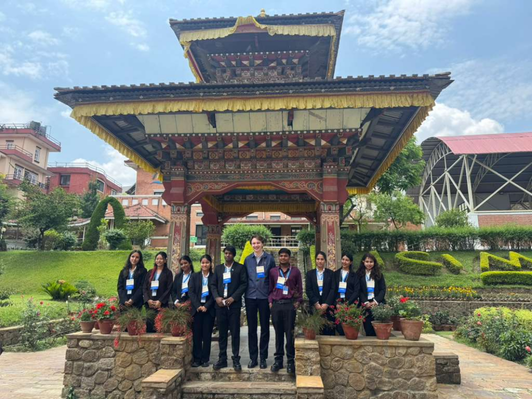
Our Nepal chapter at Tribhuvan University, led by Raj Baniya, together with our COO, Arctic youth activist Carl Philip Dybwad.
We cannot predict every emergency, but we can prepare people before one arrives. Other chapters, volunteers, and partners strengthen their communities in different ways:
Making storm guidance accessible in New York City. Volunteers translated a preparedness toolkit for community and ethnic media into 17 languages in two days. The city then commissioned its full Blizzard Safety Toolkit in 21 languages, including Bengali, Haitian Creole, and Urdu.
Taking climate education to the radio in Tanzania. Francis J. Bales’s Trash to Treasure chapter secured a free weekly Swahili segment on VOS FM across five regions, from Rukwa to Kigoma, and led workshops for 260 primary school students in local languages.
Building a climate glossary in Rohingya. In Cox’s Bazar, home to the world’s largest refugee settlement, Faizul Islam’s Faiz Institute chapter worked with 20 families to translate 50 everyday climate words into Rohingya.
Helping people talk about climate emotions. We partnered with the Climate Mental Health Network to translate its Climate Emotions Wheel into more than 30 languages. It reached more than 10,000 U.S. schools through PTAs and was used across Los Angeles after the wildfires.
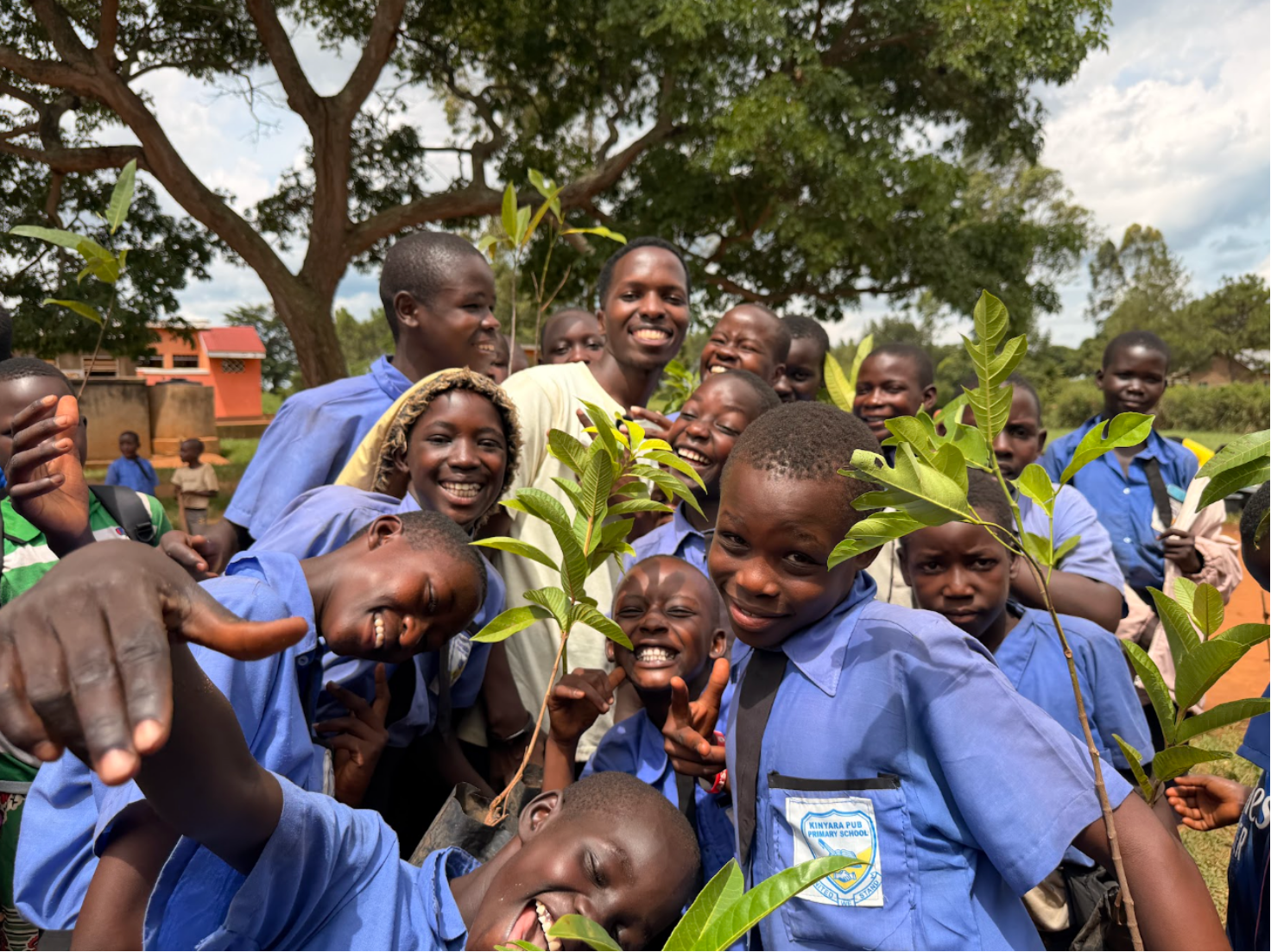
Climate Cardinals’ Kampala International University (KIU) chapter in Uganda, led by Enock “Jowel” Nionzima, hosts a climate education day for K-12 students.
We Started Small, Too
Climate Cardinals began at the start of the pandemic in 2020 with a group of U.S.-based children of immigrants brought together by a friend, $500, and Google Classroom accounts. From their childhood bedrooms, they translated climate information for people who didn’t speak English as the world closed down. More than 1,000 volunteers signed up in the first 24 hours.
Since then, we’ve mobilized more than 21,000 volunteers across 145 countries with 190+ active chapters as of November 2026. Our mission is the same today: breaking language barriers in climate so every community can take action and protect their future.
Along the way, we won the TED Countdown Global Ideas Contest, gave the closing talk at the inaugural Countdown Summit ahead of COP26, and were appointed to the UN Secretary-General's Youth Advisory Group on Climate Change. Our work has been featured in Nature Climate Change, UNESCO, the World Economic Forum, Axios, and The Kelly Clarkson Show.
As we grew, young people wanted to organize locally, build new resources, and lead long-term work, so our work grew into three programs.
Through our Translations Program, we provide free and low-cost translations to organizations with limited translation budgets, with a current focus on disaster preparedness and communications and local consultations.
Our Chapters, based in schools, universities, and local organizations, tackle local climate issues through grassroots climate education and action.
Our paid, academic-year Fellowship invests in emerging leaders ages 16 to 22, especially from non-English-speaking, immigrant, and frontline communities, who gain hands-on experience across our programs and operations.
From Communities to the Global Agenda
Our first white paper, The Global Climate Language Access Framework, examines the language barriers behind these experiences. Led by Climate Cardinals’ Research Team and 2025-2026 fellows, it sets out how governments and philanthropies can budget for language access and work with trusted local messengers from the start.
That work is now shaping the global agenda. At COP31 in Antalya this month, language access came up in country negotiations, and the Global Youth Statement, youth’s formal input to the UN climate negotiations, called for multilingual climate information. Our Executive Director and Julius, our Kepler College chapter lead from Kigali, Rwanda, joined the UN Secretary-General's roundtable with youth networks, and officials from several countries asked to meet with us about their climate plans.
The research travels, too. Our June white paper on language barriers in climate philanthropy reached the Ford, Open Society, Oak and IKEA foundations, and Alliance Magazine invited us to write about it. Grist and IndigiNews later cited our January paper, and our COO presented its policy proposals to members of the Norwegian Parliament.
Giving makes this work possible. Funding translation allows an existing resource to serve more people. Supporting networks with chapters gives a local team room to act on what it knows.
What We Accomplished in 2026
Our 2026 Impact Report shows the year across our three programs.
Translations: Volunteers completed 351 translation deliverables, representing more than 560,000 words and $293,000+ in free translation services. That is $19 of translation for every $1 we spent. Since 2020, our volunteers have translated UNICEF’s Children’s Climate Risk Index into Indigenous and African languages for 124 UNICEF offices across Africa. For Yale Climate Connections, we translated climate news and emergency guides into Spanish for Hispanic and Latinx communities.
Chapters: We grew from 68 active chapters at the end of 2025 to 185+ across 46 countries. We also approved 23 grants for 19 of our chapters from our regranting pool. Among funded chapters surveyed:
Half said their projects would not have happened without the grant.
The other half said they would have had to carry out smaller projects.
Here’s what that looks like on the ground.
In Kwale County, Kenya, Gabriel Itote Mwangi’s Pwani University chapter worked with the Majoreni community, the Kenya Forest Service, and the county government to plant 1,100 mangroves, 100 more than planned after the community donated extra seedlings. Together they set up a joint system to track how many survive. For Gabriel, the chapter is “an opportunity to amplify climate action at the local level using the local language.”
In Northeast Nigeria, Paul Balogun’s chapter has reached 219 young people in Adamawa and Gombe States, training climate communicators in Hausa and Fulfulde. It also opened a Climate Translation & Action Club at Pace Setters College, where students and teachers now train as climate translators.
In Peru’s Cordillera Blanca, Junior Adrian Figueroa Miranda’s Áncash Youth chapter runs Young Glacier Ambassadors, bringing young people from five provinces of the Callejón de Huaylas to Huaraz to learn from Peru’s national glacier and water institutions. “Glaciers are not only ice landscapes,” Junior says, “but also sources of culture, water, and identity for Andean communities.”
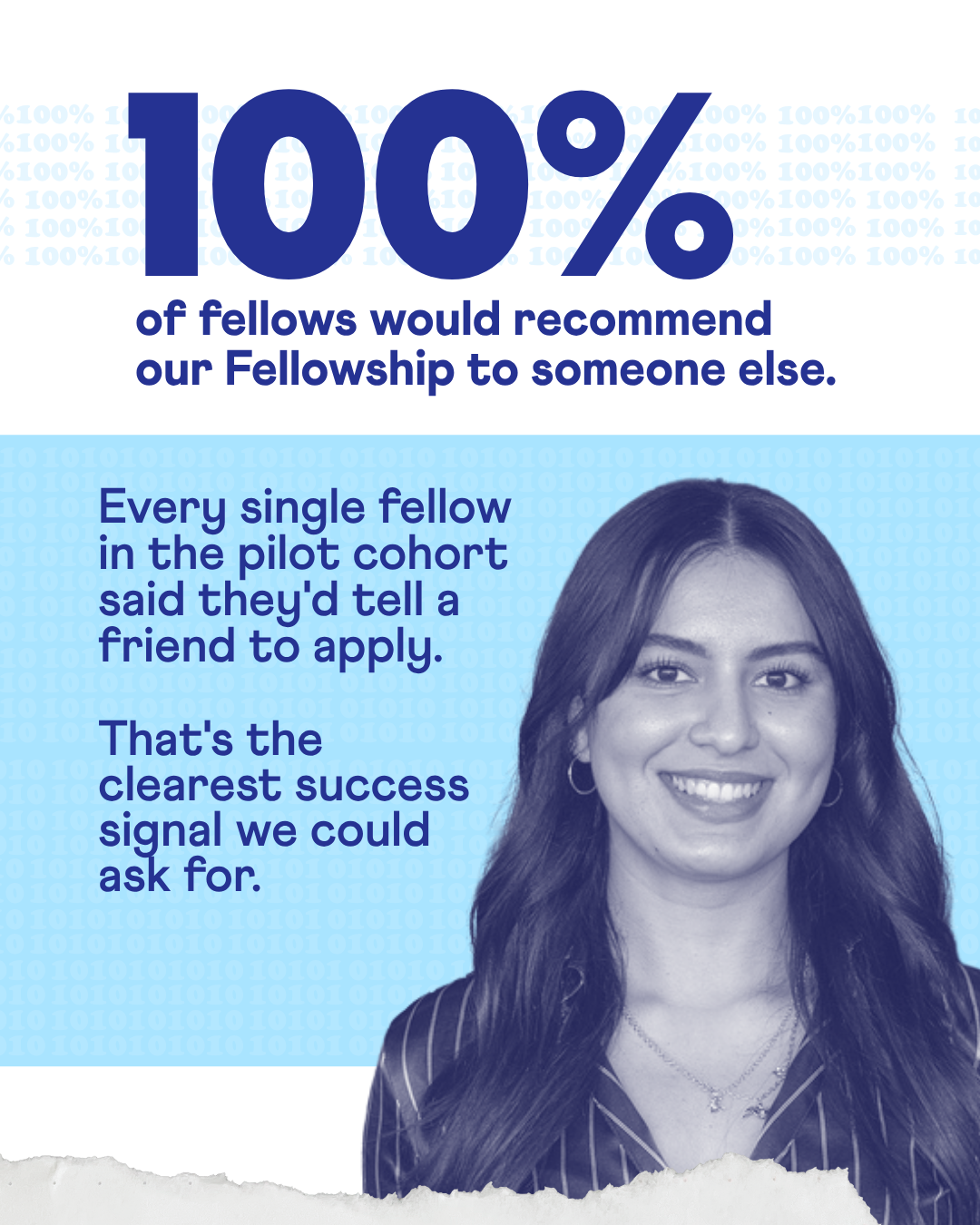
Fellowship: Our 2026-2027 Fellowship selected
30 young people from 6,629 applicants in 133 countries,
each with a $1,500 stipend.
Among the fellows who completed matched surveys in our 2025-2026 pilot, confidence accessing resources rose by 34 percentage points, and confidence in taking climate action rose by 24 percentage points.
Read the findings in our Fellowship pilot review.
Fellows leave ready to lead. Aisiri Aithal from India said the Fellowship “made me more confident working in teams, managing projects, and communicating clearly.” For Angela Hsuan Chen, it pushed her to organize “with fellow youth to make the movement bigger than an intellectual exercise.” Fellow Isabela Valencia went on to lead our June white paper on language barriers in climate philanthropy.
We celebrated the completion of our first Fellowship pilot for 25-26.
Help Someone Take Their Next Step
This Giving Tuesday, there are several ways to support Climate Cardinals:
Make a donation. Help sustain chapter grants, translation coordination, and Fellowship stipends.
Become a volunteer translator. Put your language skills toward making climate information accessible to more people.
Support a chapter. Connect a local team with a school, community partner, or space for an activity. Start by asking what the chapter needs.
Climate Cardinals began with $500 and a group of friends willing to help. It has grown because thousands of people gave their time, skills, and support.
This December 1, we invite you to join them.
